Specialty care · Axzons Homecare

Post-Hospital Recovery Care at Home Nassau County

The First 30 Days Home Are the Most Dangerous

After a hospital discharge, the clock starts immediately. Our nurse-led post-hospital recovery care at home helps Nassau County families close the gap, before it becomes a crisis.

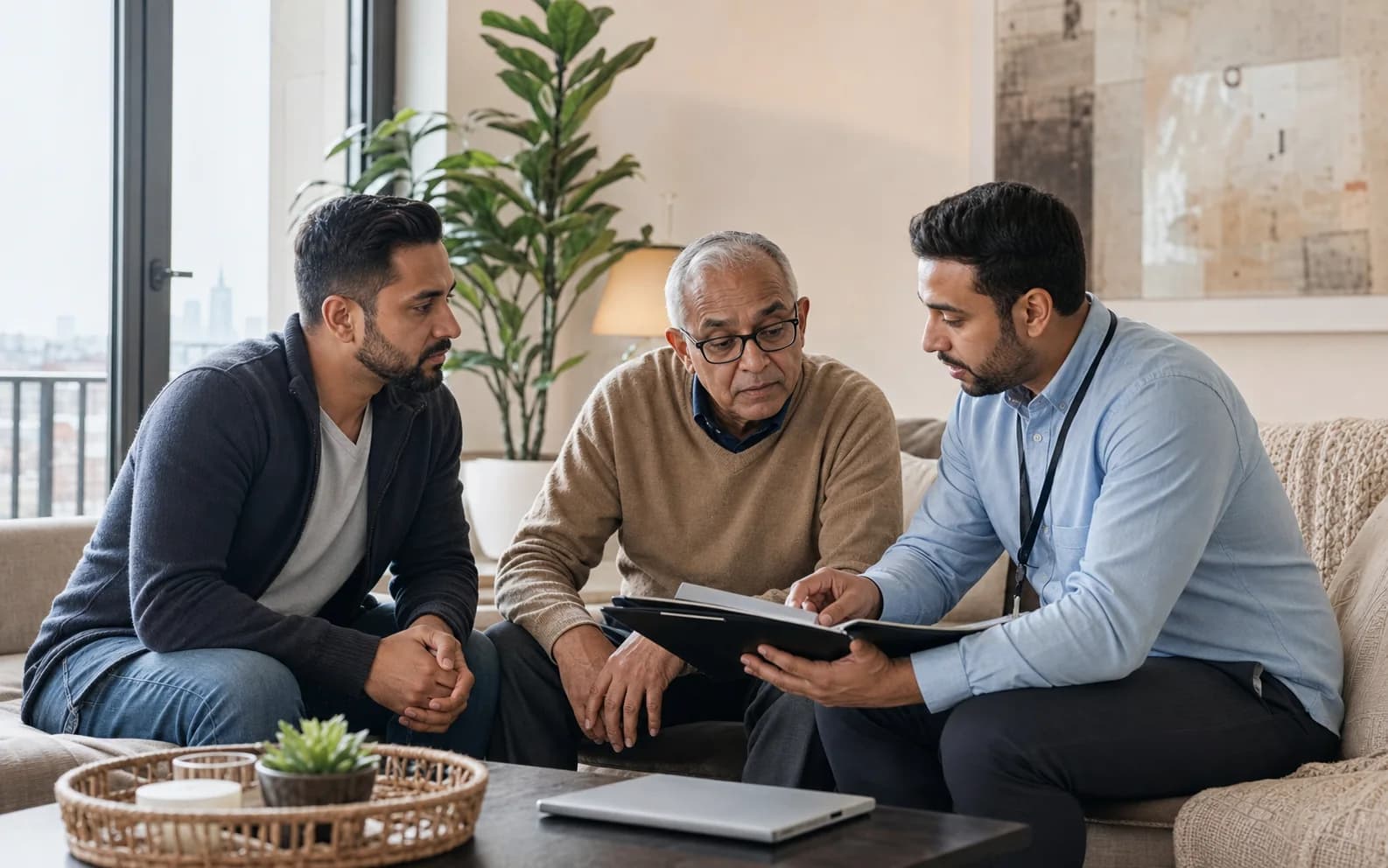
A care professional reviewing an at-home recovery plan with an older adult and his son

What Makes Axzons Homecare Different

Joint Commission Gold Seal Accredited

We've earned The Gold Seal of Approval from The Joint Commission, the same body that accredits hospitals. Very few home care agencies reach this standard.

Nurse-Reviewed Care Plans, Always

Every care plan is shaped and reviewed by our nursing team, not just assigned by an administrator, so recovery stays clinically grounded from day one.

Nassau County Offices, Local Response

We have offices in Valley Stream, West Hempstead, and Wantagh. When you call, you're reaching a team that already knows your community and can respond fast.

Serving Nassau County Since 2000

Over 25 years of homecare experience in Nassau County means we've helped families navigate discharge from nearly every hospital on Long Island.

Post-Hospital Home Care Nassau County

Discharged Doesn't Mean Healed, Here's the Reality

When a hospital says your loved one is ready to go home, it means they're medically stable, not that they're fully recovered. The weeks immediately following discharge are when complications are most likely to surface, when medications get missed, when a fall happens at 2 a.m., and when families realize they're in over their heads.

Research consistently shows that roughly 1 in 5 Medicare patients is readmitted to the hospital within 30 days of discharge. The first 72 hours are the highest-risk window. And in Nassau County, NY, where adult children are often commuting into the city on the Long Island Rail Road before their parent has even had breakfast, the gap between "discharged" and "safe" can be very real.

Post-hospital recovery care at home bridges that gap. It means a trained, vetted caregiver is there when you can't be, following a nurse-reviewed plan that's aligned with your loved one's discharge instructions and physician's orders.

Recovery Care at Home Benefits

What Changes When a Nurse Is Running the Plan

Most families don't need more stress, they need someone who knows what they're doing to take the lead and keep things on track.

  • Your loved one's care plan is reviewed by a registered nurse, not handed off to whoever is available that week.
  • You stop trying to decode 10 pages of discharge instructions and start getting clear, coordinated support at home.
  • Medication schedules, dietary needs, wound care protocols, all managed under one plan, not pieced together from multiple providers.
  • You can get back to work knowing a screened, trained caregiver is present during the hours you can't be there.
  • If your loved one's condition changes, the care plan adjusts, our nursing team stays involved throughout recovery, not just at intake.
  • Structured post-hospital support has been shown to reduce 30-day readmission rates by up to 25%, fewer crises, fewer emergency calls, fewer trips back to the ER.
Nassau County Hospital Discharge Care

Nassau County Families Face a Specific Problem Here

Nassau County, NY is one of the most densely populated commuter communities in the country. Hundreds of thousands of residents travel into New York City every day, via the LIRR, the Long Island Expressway, the Southern State Parkway, the Northern State Parkway, and many of them have aging parents living in the same county they're leaving at 7 a.m.

When a parent is discharged from NYU Langone Hospital on Long Island in Mineola, or from North Shore University Hospital in Manhasset, or from Mount Sinai South Nassau in Oceanside, the adult child who needs to arrange care often does so from a train platform or a lunch break. The discharge notice sometimes comes with less than 24 hours to prepare.

That's the reality we work with every day. Our care coordinator follows up the same business day you reach out, and once an in-home visit is completed, we can typically refer a caregiver within 24 hours. For Nassau County families, that speed isn't a feature, it's the difference between a safe recovery and a preventable setback.

Transitional Home Care Services Nassau County

One Call Covers More Than You'd Expect

One of the most exhausting parts of post-hospital recovery isn't the caregiving itself, it's the coordination. Families often find themselves managing a home health aide from one agency, a visiting nurse from another, a nutritionist they found separately, and a social worker who stopped following up after week one.

We don't work that way. Under one nurse-reviewed care plan, we coordinate homecare and personal assistance, private duty nursing for complex medical needs, specialized care for conditions like COPD, Parkinson's, or post-stroke recovery, nutritional counseling, medical social services, and home health aide support. Six services, one plan, one point of contact.

Whether your loved one is recovering from a cardiac procedure at St. Francis Hospital in Roslyn or coming home from Nassau University Medical Center in East Meadow after a fall, the support they need doesn't have to come from six different directions. Membership plans start at $399 per month, and we accept all types of payments and insurances, so the financial piece doesn't have to be another thing you're figuring out on your own.

Starting Post-Hospital Home Care Nassau County

From First Call to Caregiver at the Door

  1. Step 1

    Call or Start Online

    Reach out by phone or through our website, a care coordinator follows up the same business day to understand your situation.

  2. Step 2

    Nurse-Led In-Home Assessment

    Our nursing team conducts an in-home visit, reviews the discharge instructions, and builds a written care plan around your loved one's actual needs.

  3. Step 3

    Caregiver Matched and In Place

    Once the assessment is complete, we can typically refer a caregiver within 24 hours, screened, trained, and ready to follow the plan.

Frequently asked

What families ask first.

Axzons Homecare supports non-emergency homecare and care coordination. For medical emergencies, call 911 or your local emergency number.

How quickly can home care begin after a hospital discharge in Nassau County?

Speed matters most right after discharge, and we know that. When you contact us, a care coordinator will follow up the same business day during business hours. From there, we schedule an in-home nursing assessment as quickly as possible, and once that visit is complete, we can typically refer a caregiver within 24 hours. For Nassau County families dealing with a discharge notice that came with little warning, that turnaround is designed to meet the reality of how hospital discharges actually work. Whether your loved one is leaving NYU Langone in Mineola, North Shore University Hospital in Manhasset, or Mount Sinai South Nassau in Oceanside, we can move fast.

What does a nurse-led care plan actually mean for post-hospital recovery?

It means the person overseeing your loved one's care at home isn't just an aide following a checklist, it's a registered nurse who has reviewed the discharge paperwork, understands the medical context, and built a written plan that reflects what your loved one actually needs during recovery. That plan covers daily assistance with activities like bathing, dressing, and mobility, but also accounts for medication schedules, dietary restrictions, wound care protocols, and any condition-specific needs. As recovery progresses and circumstances change, our nursing team stays involved to update the plan, not just at intake, but throughout the process.

Does Medicare cover post-hospital home care services?

Medicare does cover home health services in certain situations, specifically when a physician orders the care, the patient meets the homebound criteria, and skilled nursing or therapy services are part of the plan. In those cases, Medicare covers the cost with no deductible or copayment for qualifying services. That said, Medicare does not cover non-skilled personal care indefinitely, so what's covered depends on the specific services your loved one needs and for how long. We accept all types of payments and insurances, and our team can help walk through what applies to your situation so you're not left guessing.

What is the difference between a home health aide and a private duty nurse for recovery care?

A home health aide assists with the personal, day-to-day tasks that become difficult after a hospitalization, bathing, dressing, grooming, mobility support, medication reminders, and companionship. They work under a nurse-reviewed care plan but do not perform clinical procedures. A private duty nurse, either an RN or LPN, provides one-on-one skilled nursing care at home: wound care, IV infusions, ventilator management, and complex medication regimens that require clinical training. Many post-hospital recovery situations start with a need for both. Under our model, both types of support are coordinated under the same nurse-reviewed plan, so there's no gap between the clinical and the personal.

What happens if my loved one doesn't get along with the assigned caregiver?

It happens, and it's not a reason to abandon home care altogether. We build flexibility into our model specifically because caregiver fit matters, especially for someone recovering at home who may already feel vulnerable or out of their routine. If the match isn't working, we'll make a change. Our team continuously screens caregivers so we have the depth to reassign without leaving your loved one without support. The goal is a caregiver your loved one is comfortable with and can trust, and we don't consider the placement complete until that's the case.

Can home care actually prevent a hospital readmission, or is that just a marketing claim?

It's a real, measurable outcome backed by research. Studies show that roughly 50% of hospital readmissions are potentially preventable, and structured transitional care programs, the kind that include nurse oversight, medication management, and consistent in-home support, can reduce 30-day readmission rates by up to 25%. The average hospital readmission costs around $15,200, and beyond the financial cost, it's a setback that can significantly slow recovery. Our care model is explicitly designed to reduce re-hospitalization by keeping the care plan current, keeping the physician in the loop, and making sure the support at home is actually matching the patient's needs, not just filling hours.

Ready to talk it through

A care coordinator will follow up during business hours. No automated system, no obligation, and the first assessment is always free.