Specialty care · Axzons Homecare

COPD Home Care Services Nassau County

Stay Home Safely, Even With COPD

Specialized in-home COPD care in Nassau County, managed by registered nurses and matched caregivers trained specifically for respiratory conditions, not general-purpose aides.

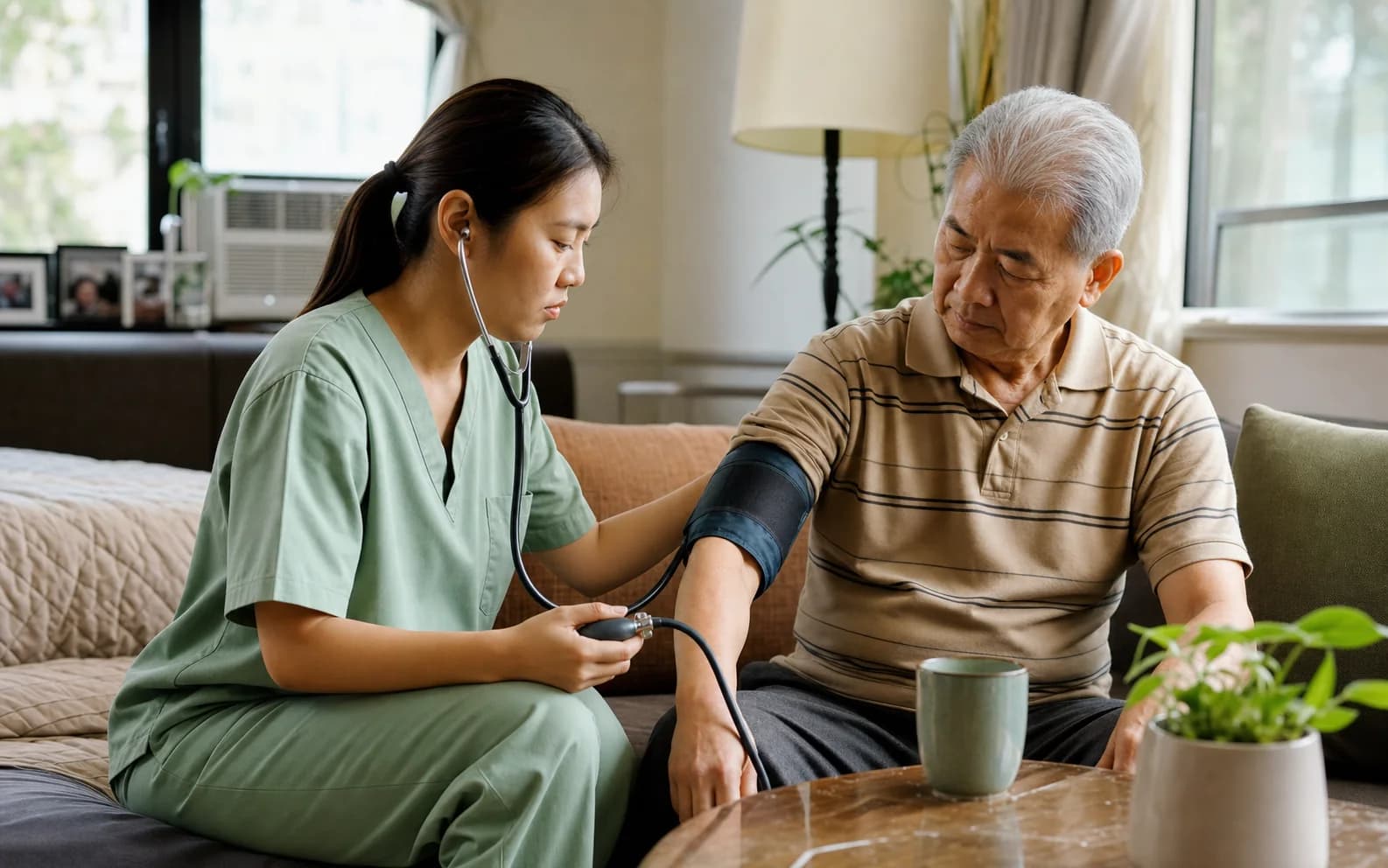
A homecare nurse monitoring an older adult with COPD in his living room

What Actually Sets Us Apart

Joint Commission Gold Seal Accredited

Our care standards have been independently audited and verified by The Joint Commission, the highest accreditation in healthcare, earned by very few home care agencies.

NY State Licensed LHCSA Agency

We are fully licensed under the New York State Department of Health as a Licensed Home Care Services Agency, a legal requirement we meet completely.

Registered Nurse Supervised Care

Every care plan is coordinated with your physician and supervised by an RN, not left to the caregiver alone to figure out.

Caregiver Placed Within 24 Hours

After an in-home visit, we can typically refer a qualified, COPD-trained caregiver within 24 hours, critical when a hospital discharge can't wait.

COPD Home Care Nassau County

COPD Is Manageable at Home. With the Right Support.

Most people living with COPD don't want to leave their home, and they shouldn't have to. What they need is the right kind of help: someone who understands oxygen equipment, recognizes when breathing is getting worse, and knows how to support daily life without triggering exhaustion or panic.

That's a different skill set than general home care. It requires specific training, clinical oversight, and a caregiver who's been prepared for exactly this condition.

At Axzons Homecare, respiratory care is a named, structured service, not an afterthought. We serve COPD patients across Nassau County, from Hempstead and Mineola to Garden City, Massapequa, Great Neck, and everywhere in between.

In-Home COPD Management Benefits

What Changes When the Right Care Is in Place

For COPD patients and their families, the right home care doesn't just help day-to-day, it changes the entire trajectory of the condition.

  • Your loved one gets a caregiver trained specifically for COPD, not a generic aide learning on the job.
  • Medication schedules and inhaler routines stay consistent, which directly reduces the risk of a preventable flare-up.
  • Early warning signs of an exacerbation get caught before they become an emergency room visit.
  • Oxygen therapy equipment is monitored and supported safely, so nothing gets overlooked between physician visits.
  • You stop carrying the whole weight of this alone, there's a nurse-coordinated team behind every visit.
  • Your parent or loved one stays in the home they know, in Nassau County, where they've built their life.
Nassau County Respiratory Home Care

Nassau County Creates Real COPD Challenges

Living on Long Island isn't easy when your lungs are already under pressure. Nassau County's coastal climate brings cold, damp winters that constrict airways and trigger exacerbations, and humid summers with elevated ground-level ozone that are just as hard on the respiratory system.

The county's major roadways, including the Long Island Expressway, Northern State Parkway, and Hempstead Turnpike, carry some of the highest traffic volumes in the region. Long-term exposure to vehicle exhaust is a documented contributor to respiratory disease.

A COPD patient living in Levittown, Rockville Centre, or Long Beach isn't just managing a chronic lung condition, they're managing it in an environment that adds pressure year-round. That's exactly why in-home respiratory care in Nassau County isn't a luxury consideration. It's practical, proactive disease management.

What COPD Caregivers Actually Do

This Goes Far Beyond Companionship

There's a common assumption that home care for COPD is mostly about having someone around for company and light housekeeping. Our caregivers do something entirely different.

We train them specifically for respiratory conditions, which means they understand pursed-lip breathing and diaphragmatic breathing techniques, they know how to support a patient on supplemental oxygen safely, and they're watching for the early signs that a flare-up may be developing: changes in mucus, increased breathlessness, a shift in energy or color.

Beyond the clinical side, our caregivers assist with personal care, medication reminders, meal preparation, mobility support, and the activities of daily living that become exhausting when every breath takes effort. Because our model is nurse-coordinated, there's an RN involved in your loved one's care plan, not just a caregiver making independent decisions in your parent's home.

Starting COPD Home Care Nassau County

Getting Started Is Simpler Than You Think

  1. Step 1

    In-Home Assessment First

    We visit your loved one's home, assess their COPD care needs, and build a clear picture of what support looks like day-to-day.

  2. Step 2

    Caregiver Matched and Placed

    We match a caregiver specifically trained for respiratory conditions, typically within 24 hours of your assessment, so care starts fast.

  3. Step 3

    RN-Supervised Ongoing Care

    A registered nurse coordinates the care plan with your physician and monitors progress, so the whole team stays aligned as needs evolve.

Frequently asked

What families ask first.

Axzons Homecare supports non-emergency homecare and care coordination. For medical emergencies, call 911 or your local emergency number.

What does a home caregiver actually do for someone with COPD?

Our COPD-trained caregivers support medication and inhaler schedules, assist with breathing exercises like pursed-lip and diaphragmatic breathing, monitor oxygen therapy equipment, help with personal care and meal preparation, and watch for early signs that a flare-up may be developing. The goal is to keep your loved one comfortable and stable at home, and to catch problems before they turn into emergency situations. Unlike generic home health aides, our caregivers are specifically trained for respiratory conditions from the start.

Can someone with COPD really live safely at home in Nassau County?

Yes, and for most people with COPD, home is genuinely the best environment for their well-being. That said, Nassau County's climate does add complexity. Cold winters along the Long Island coast are a documented COPD trigger, and summer humidity and ground-level ozone can make breathing harder even on ordinary days. With the right in-home support, a trained caregiver, an RN-coordinated care plan, and consistent medication management, most COPD patients can live safely and comfortably at home. The key is having a support structure that matches the real demands of the condition, not a generic aide who's unfamiliar with respiratory care.

How quickly can we get a caregiver in place after my parent is discharged from the hospital?

Speed matters enormously in that window. The 30 days following a COPD hospitalization are the highest-risk period for readmission, and having professional support in place quickly can make a real difference. After an in-home visit, we can typically refer a qualified caregiver within 24 hours. Nassau County is served by several major hospitals, including Nassau University Medical Center in East Meadow, NYU Langone Hospital, Long Island in Mineola, and North Shore University Hospital in Manhasset, and we work with families navigating post-discharge transitions regularly. If you're sitting in a discharge office trying to figure out what comes next, call us, that's exactly the situation we're built for.

Does Medicare or insurance cover COPD home care services?

It depends on the specific services and your loved one's situation, but coverage is often available and worth exploring before assuming you'll be paying entirely out of pocket. Medicare covers certain skilled home health services for homebound patients following a qualifying hospital stay or with a physician's order. Medicaid also covers home care services for eligible individuals. We accept all types of payments and insurances, and we can help walk you through what may be covered for your specific circumstances. Don't let financial uncertainty delay a conversation, it's often more manageable than families initially expect.

What's the difference between an agency like Axzons Homecare and a consumer-directed program?

It's an important distinction, especially for COPD. Consumer-directed programs allow clients or their families to hire and manage their own aides, sometimes including family members. That model can work for certain situations, but it places the responsibility for caregiver selection, training, and oversight on the family. Axzons Homecare operates as a licensed agency: we recruit, train, match, and supervise every caregiver. A registered nurse is involved in the care plan, and your loved one's physician stays in the loop. For a medically complex condition like COPD, where a caregiver needs to recognize an exacerbation, safely support oxygen therapy, and follow a clinical care plan, that layer of professional oversight isn't optional. It's what makes the difference between care that holds and care that falls apart.

How do I know the caregiver has actually been trained for COPD, not just general home care?

That's exactly the right question to ask any agency you're considering. At Axzons Homecare, respiratory care is a structured, named service, not a checkbox on a generic intake form. Our caregivers are trained specifically for COPD and other respiratory conditions, which means they understand the clinical realities: oxygen equipment, inhaler routines, breathing technique coaching, energy conservation strategies, and early exacerbation recognition. We hold The Joint Commission Gold Seal of Approval, the most rigorous independent accreditation in healthcare, which means our clinical processes and patient safety standards have been externally audited and verified. That's not a self-reported claim. It's an earned credential, and it's one of the clearest signals that the care your loved one receives will meet a real clinical standard.

Ready to talk it through

A care coordinator will follow up during business hours. No automated system, no obligation, and the first assessment is always free.